Finding the Best Epoxy Garage Flooring Contractor in Clearwater FL
 Angela Kelly
Epoxy garage flooring has become an increasingly popular choice for homeowners and businesses seeking durable, attractive, and functional flooring solutions. This type of flooring is created by applying a layer of epoxy resin, a two-part system that combines resin and hardener to form a strong, chemically bonded surface. The result is a smooth, glossy, and long-lasting finish that can withstand heavy use and harsh conditions.
What Is Epoxy?
Epoxy is a thermosetting polymer made by mixing two components – resin and hardener. When these components are combined, they undergo a chemical reaction called curing. This process transforms the liquid mixture into a solid-state material with exceptional strength, adhesion, and resistance to wear.
- Durability: Once cured, epoxy forms a tough coating resistant to impact, scratches, stains, and chemicals.
- Adhesion: Epoxy bonds exceptionally well to properly prepared surfaces like concrete.
- Versatility: It can be customized with colors, textures, flakes, or metallic effects to suit specific design preferences.
How Does Epoxy Garage Flooring Work?
- The underlying concrete must be clean, dry, and free from cracks or imperfections.
- Grinding or shot blasting may be required to create a rough surface for better adhesion.
- A primer coat is applied first to ensure strong adhesion between the epoxy layer and the concrete surface.
- This step also helps seal any pores in the concrete.
- The resin and hardener are combined according to specific ratios.
- Proper mixing ensures uniform curing and optimal performance.
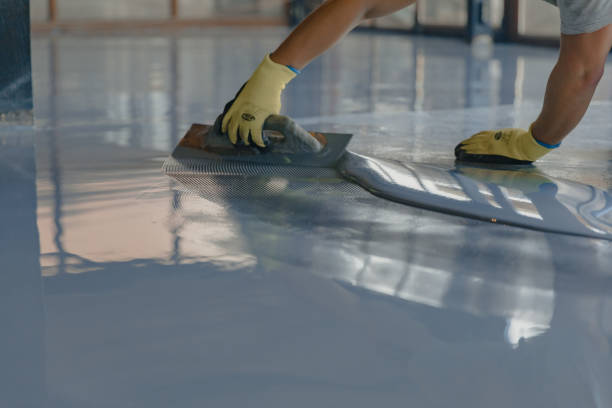
- Once mixed, the base coat of epoxy is applied evenly across the surface using rollers or squeegees.
- Multiple layers may be added depending on desired thickness.
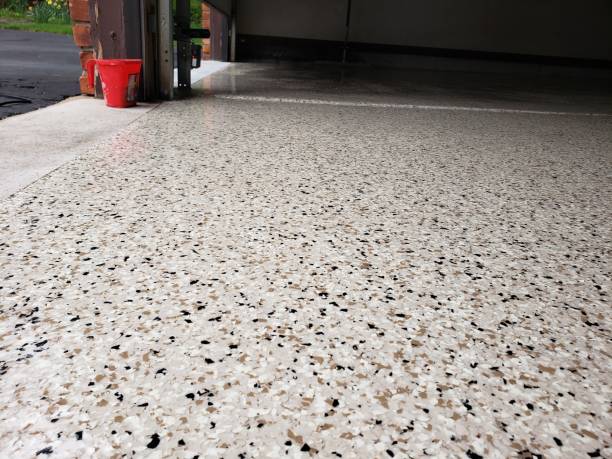
- To enhance aesthetics, decorative chips or flakes may be broadcast across the wet base layer.
- Metallic pigments can also be added for unique finishes.
- A clear topcoat seals the floor while adding extra durability and gloss.
- This final layer protects against UV rays, stains, chemicals, and general wear over time.
| Step | Description | Purpose |
| 1 | Surface Preparation | Ensures strong bond between epoxy & floor |
| 2 | Primer Application | Seals pores & improves adhesion |
| 3 | Mixing Resin & Hardener | Activates curing process |
| 4 | Applying Base Coats | Creates foundation for durability |
| 5 | Adding Decorative Elements (optional) | Enhances visual appeal |
| 6 | Applying Topcoat | Provides long-lasting protection |
Why Choose Epoxy for Your Garage?
- Ease of Maintenance: Spills can be wiped up easily due to its non-porous surface.
- Resistance to Wear: Handles heavy vehicles without cracking or peeling over time.
- Chemical Resistance: Protects against oil spills or other corrosive substances common in garages.
By understanding what epoxy garage flooring is and how it works during installation, you’ll see why it’s considered an excellent choice for enhancing both style and functionality in your space.
Top Benefits of Choosing Clearwater Epoxy Garage Flooring for Your Space
Epoxy garage flooring has gained immense popularity in recent years due to its durability, aesthetic appeal, and versatility. Below is an in-depth look at the top benefits of choosing epoxy garage flooring for your space.
Exceptional Durability with Epoxy Flooring Installers Clearwater FL
Freedom Epoxy
7003 114th Ave Suite D, Largo, FL 33773
(866) 805-5734
https://freedomepoxy.com
- Scratch resistance:Epoxy resists scratches caused by heavy objects being dragged or moved across the floor.
- Abrasion resistance:It remains intact even under significant wear and tear over time.
Cleaning Tips:
- Regularly sweep or vacuum the floor to remove loose debris.
- Use a damp mop with mild soap or an all-purpose cleaner for periodic cleaning.
- For stubborn stains or spills, a soft-bristle brush can be used.
This low-maintenance nature saves both time and effort while keeping your garage looking polished year-round.
Epoxy floors offer an unmatched visual appeal that transforms any dull garage into a sleek and modern space. Available in various colors, patterns, and finishes (e. g. , matte or glossy), epoxy allows homeowners to customize their floors based on personal preferences.
Popular Design Options:
| Finish Type | Description |
| Solid Colors | Uniform look with one consistent color. |
| Metallic Finishes | Adds shimmer for a high-end appearance. |
| Flake Systems | Decorative flakes scattered throughout for texture and style. |
Whether you lean towards minimalistic designs or intricate patterns, there’s an epoxy solution tailored to your vision.
- Longevity:Epoxy coatings can last up to 10–20 years with proper care.
- Reduced replacement costs:Unlike bare concrete that may crack over time, epoxy minimizes repair needs.
- Energy efficiency:Light-reflective properties reduce the need for additional lighting in your garage.
These factors contribute to substantial savings over time compared to alternative flooring options.
- Non-slip options:Many installers offer additives like non-slip aggregates that enhance traction on the surface.
- Light reflectivity:High-gloss finishes improve visibility by reflecting natural light within the space.
- Fire resistance:Certain types of epoxies are resistant to fire hazards under normal conditions.
These features make epoxy floors ideal not only for residential garages but also for industrial settings where safety is paramount.
- They reduce waste since they adhere directly onto existing concrete surfaces instead of requiring full replacements.
- Many manufacturers produce epoxies with low volatile organic compounds (VOCs), resulting in reduced air pollution during application and curing processes.
If you’re seeking a greener solution without compromising performance or aesthetics, environmentally conscious epoxies are available on the market today.
By combining strength with style while offering practical benefits like easy maintenance and safety enhancements, epoxy garage flooring sets itself apart as one of the most viable choices for modern garages—whether residential or commercial. Its ability to meet both functional demands and design preferences ensures it continues growing as a preferred flooring option worldwide.
A Step-by-Step Look at the Epoxy Flooring Installation Process
The epoxy flooring installation process is a critical factor in ensuring the durability, aesthetics, and functionality of your garage floor. A properly executed installation not only enhances the performance of the floor but also extends its lifespan. Below is a detailed breakdown of each step involved in installing an epoxy garage floor.
Proper surface preparation is essential to ensure that the epoxy adheres effectively to the concrete substrate.
- Cleaning: Remove all dust, dirt, oil stains, grease, and any other contaminants from the surface.
- Repairing Damage: Patch cracks, holes, or uneven areas using concrete filler or repair mortar.
- Grinding or Etching: Mechanically grind or acid-etch the concrete to create a rough surface profile that promotes adhesion. Grinding is often preferred for professional installations due to its precision.
Tools and Materials Needed: | Item | Purpose | |———————–|—————————–| | Industrial vacuum | Removes debris after prep | | Concrete grinder | Creates a rough surface | | Degreaser/cleaner | Eliminates oil and grease |
The primer coat serves as a foundation for better adhesion and leveling of the subsequent epoxy layers.
- Mixing the primer according to manufacturer instructions.
- Rolling it evenly onto the prepared surface with a paint roller.
- Allowing sufficient curing time (usually 6–8 hours) before applying additional layers.
Primers are especially useful for porous concrete surfaces as they seal small voids and reduce air bubbles during application.
- Combine resin (Part A) with hardener (Part B) in exact proportions specified by the manufacturer.
- Stir thoroughly using a drill mixer for uniform consistency.
- Pour the mixed epoxy onto sections of the floor in ribbons.
- Spread it evenly using a squeegee or roller while maintaining consistent thickness across all areas.
- Use a spiked roller to remove trapped air bubbles.
- Color Flakes/Chips: Broadcast flakes over wet epoxy for texture and design variety.
- Metallic Pigments: Add pigments during mixing to create swirling effects resembling marble or stone finishes.
Depending on your preferences, this step can enhance both aesthetics and slip resistance.
- Apply either polyurethane or polyaspartic topcoat over cured epoxy.
- Ensure even coverage with high-quality rollers designed for smooth finishes.
- Allow adequate curing time as per product guidelines before resuming use of your garage space.
Tips for Success During Installation
- Work quickly once components are mixed; epoxies have limited working times before curing begins.
- Monitor humidity levels—high moisture content may interfere with adhesion or curing.
- Invest in quality materials from reputable brands to ensure durability and long-term performance.
By following these steps carefully and paying attention to detail at every stage, you can transform your garage into an attractive yet highly functional space equipped with reliable epoxy flooring solutions tailored specifically to your needs.
A Step-by-Step Look at the Epoxy Flooring Installation Process
The epoxy flooring installation process is a multi-step procedure that ensures a durable and visually appealing finish. Proper preparation and application are critical to achieving long-lasting results, making it essential to follow each step with precision. Below is a detailed guide outlining the key phases of epoxy garage flooring installation.
Surface preparation is one of the most crucial steps in the epoxy flooring process, as it ensures proper adhesion between the substrate and the epoxy coating.
- Clean the Floor: Ensure that the garage floor is free from dust, dirt, grease, oil stains, or any other contaminants.
- Repair Damage: Address cracks, chips, or uneven areas by using concrete patching compounds or fillers.
- Use acid etching or mechanical grinding to open up the concrete surface pores.
- This creates a rough texture for better epoxy adhesion.
- Vacuum Thoroughly: Remove all debris and dust created during grinding or etching.
Applying primer enhances epoxy adhesion and creates a strong bond with the concrete floor.
- Use a roller or squeegee to apply an even coat of primer across the surface.
- Allow adequate drying time (often recommended by manufacturers) before moving to the next step.
| Primer Type | Benefits | Typical Drying Time |
| Solvent-Based | Deep penetration into pores | 4–6 hours |
| Water-Based | Eco-friendly option | 6–8 hours |
Proper mixing of epoxy resin and hardener is critical for achieving optimal performance.
- Follow manufacturer instructions for exact ratios of resin to hardener.
- Use a drill mixer at low speed to avoid introducing air bubbles into the mixture.
- Pour mixed epoxy onto sections of your floor in ribbons.
- Spread evenly using a notched squeegee or roller in overlapping strokes.
- Sprinkle vinyl flakes over wet epoxy for texture and visual interest.
- Customize flake density based on your desired look.
- Mix metallic pigments into epoxy for an elegant, marbled effect.
The final layer provides additional durability and makes your floor resistant to wear and tear.
- Choose between clear or pigmented topcoats depending on your design preference.
- Apply using rollers or brushes in thin layers for a uniform finish.
Benefits of a topcoat include: – Enhanced chemical resistance – UV protection (if using UV-stable coatings outdoors) – Improved scratch resistance
Key Considerations During Installation
- Temperature control is vital—most epoxies cure best between 60°F–85°F (15°C–30°C).
- Avoid high humidity levels during application as moisture may interfere with curing.
- Follow manufacturer-specific drying times between coats before proceeding with subsequent layers.
This step-by-step guide lays out everything necessary for creating durable and visually stunning epoxy garage floors through proper installation practices. Each phase contributes significantly to both functionality and appearance over time when done correctly.
Creative and Unique Design Options from an Epoxy Flooring Company Clearwater FL
Epoxy garage flooring is not just about durability and functionality; it also offers a wide range of creative design options that can transform your garage into a visually striking and personalized space. Whether you want a modern, industrial look or something more vibrant and artistic, epoxy coatings can be customized to suit your aesthetic preferences. Below are some innovative ideas and techniques to create unique designs with epoxy garage flooring.
Custom Color Blends
Epoxy coatings come in virtually any color imaginable, allowing you to create custom blends tailored to your taste.
– Solid Colors: Choose a single shade for a sleek, minimalist look.
– Marbled Effects: Blend multiple colors to achieve swirled or marbled patterns that mimic natural stone like granite or marble.
– Gradient Designs: Create an ombre effect by transitioning between two or more colors seamlessly across the floor.
Decorative Flakes and Chips
Adding decorative flakes or chips is one of the most popular ways to enhance epoxy floors. These chips not only add texture but also improve slip resistance. You can customize this approach by selecting different sizes, colors, and finishes such as metallic or reflective pieces.
– Multicolored Flakes for a terrazzo-like appearance.
– Monotone Flakes for understated texture in neutral tones like gray or beige.
– Metallic Chips for an eye-catching shimmer effect.
| Chip Type | Visual Effect | Best Use Case |
| Multicolored | Dynamic and playful | Family garages |
| Monotone | Sleek and professional | Workspaces |
| Metallic | Luxurious and reflective | High-end garages |
Metallic Epoxy Flooring
For those seeking an upscale, modern look, metallic epoxy coatings are the perfect choice.
– 3D Illusions: Create visual depth with patterns that resemble waves, lava flows, or clouds.Pearlescent Finishes: Add iridescence for a high-gloss look resembling polished metal.Abstract Designs: Experiment with freeform swirls or geometric layouts for a unique result.
Logos and Graphics
Personalize your garage floor further by embedding logos, symbols, or graphics into the epoxy coating. This option is especially popular among car enthusiasts who want to display their favorite automotive brand logo prominently on their floor.
Steps typically include: 1. Applying the base layer of epoxy. 2. Positioning the pre-designed graphic between layers. 3. Sealing it with clear top coats for protection and durability.
Glow-in-the-Dark Additives
For something truly out-of-the-box, consider incorporating glow-in-the-dark additives into your epoxy coating mix. These phosphorescent materials absorb light during the day and emit an ambient glow after dark—a practical yet fun feature that enhances nighttime visibility in garages.
Polished Concrete Look with Epoxy Coatings
If you prefer an industrial yet refined aesthetic, opt for clear epoxy over polished concrete slabs: – This retains the natural texture of raw concrete while adding durability. – Tinted clear epoxies can be used if you wish to alter the shade subtly without losing that concrete-style charm.
By merging creativity with functionality through these design strategies, epoxy garage flooring offers endless opportunities to craft a space that reflects both personal style and practical needs while maintaining its durable reputation.
How to Choose the Best Epoxy Garage Flooring Installer for Your Project
Selecting the right epoxy garage flooring installer is essential to ensuring a high-quality and long-lasting finish. An experienced and reliable professional will not only deliver exceptional results but also provide valuable guidance throughout the process. Here are some key factors to consider when choosing the best epoxy garage flooring installer for your project.
Research and Verify Credentials
Before hiring an installer, it’s important to thoroughly research their background and credentials.Licensing: Verify that the installer is licensed to perform flooring installations in your area.Insurance: Ensure they carry adequate liability insurance to protect against any damages or accidents during the project.Certifications: Look for certifications or training related to epoxy coating applications, as this demonstrates their expertise.
Evaluate Experience and Portfolio
The level of experience an installer has can significantly impact the quality of their work.Years in Business: Installers with several years of experience are more likely to deliver consistent results.Portfolio of Work: Request examples of previous projects, such as photos or case studies, to gauge their craftsmanship and attention to detail.Specialization: Consider whether they specialize in residential, commercial, or both types of epoxy flooring applications.
Read Reviews and Testimonials
Client feedback is an excellent way to assess an installer’s reputation: – Browse online reviews on platforms like Google or Yelp for honest customer opinions. – Check if they have testimonials on their website or social media pages. – Ask for references from past clients so you can speak directly about their experience with the installer.
Request a Detailed Estimate
A professional epoxy flooring contractor should be able to provide a transparent and detailed estimate.
Compare multiple estimates from different installers while considering both pricing and value provided.
Assess Communication Skills
Effective communication is critical when working with a contractor.
A contractor who communicates well will make the entire process smoother.
Check Warranties Offered
Reliable installers stand behind their work by offering warranties. Be sure to ask about: 1. The duration of coverage (e. g. , 1 year, 5 years) 2. What aspects are included (e. g. , peeling, cracking) 3.
Red Flags to Avoid
Be cautious if you encounter any of these warning signs: – Lack of proper licensing or insurance – Poor online reviews without valid explanations – Unwillingness to provide references or a portfolio – Pressure tactics for upfront payments without contracts
Choosing an epoxy garage flooring installer is a decision that requires careful consideration. By taking these steps, you can ensure confidence in your selection while setting your project up for success with long-lasting results.
Understanding the Differences Between Residential and Commercial Epoxy Flooring Applications
Epoxy flooring is a versatile and durable solution, but its applications and requirements can differ significantly between residential and commercial spaces. Understanding these differences is crucial when deciding which type of epoxy system is best suited for your needs.
Purpose and Functionality
- Typically used in garages, basements, patios, or workshops.
- Designed to enhance aesthetic appeal while providing a durable surface for light to moderate foot traffic.
- Often incorporates design elements like decorative flakes, metallic finishes, or custom colors to complement the home’s interior or exterior design.
- Ideal for high-traffic areas like warehouses, factories, retail stores, hotels, or healthcare facilities.
- Prioritizes performance attributes such as load-bearing capacity, chemical resistance, slip resistance, and longevity over aesthetic customization (though visual enhancements are still possible).
Durability Requirements
| Factor | Residential Flooring | Commercial Flooring |
| Traffic Level | Low to moderate (household use) | High (foot traffic, heavy machinery, vehicles) |
| Load Resistance | Light vehicles or furniture | Industrial equipment like forklifts |
| Chemical Resistance | Minor spills (e.g., household cleaners) | High resistance needed for oils, chemicals |
For residential spaces such as garages or home workshops that house occasional cars or tools, a standard epoxy system is typically sufficient. In contrast, commercial floors may require specialized formulations designed for industrial-grade durability.
Aesthetic Considerations
- Decorative flakes for texture.
- Metallic pigments creating marbled effects.
- Custom color schemes matching home décor themes.
- Commercial spaces prioritize functionality but still have options like logos embedded into epoxy coatings or anti-slip textures that align with branding needs or safety regulations.
Installation Complexity
- Residential Installationsare usually smaller in scope with fewer technical challenges related to drainage systems or large open areas.
- Commercial Installationsinvolve larger-scale projects requiring careful planning for curing times around business operations to minimize downtime.
Understanding these distinctions helps guide decision-making when selecting the right type of epoxy flooring system. This knowledge ensures that whether applied in a home garage or an industrial warehouse setting, your flooring will perform optimally while meeting style preferences where appropriate.
Why Epoxy Is a Superior Choice for Durable and Stylish Floor Coatings
Epoxy flooring has gained immense popularity in both residential and commercial settings due to its unparalleled durability, aesthetic versatility, and cost-effectiveness. Whether you’re designing a garage, showroom, or industrial facility, epoxy offers a unique combination of resilience and style. Below, we’ll explore why epoxy stands out as a superior choice for floor coatings.
Exceptional Durability
When it comes to strength and longevity, epoxy flooring is hard to beat. Its durability makes it perfect for high-traffic areas and spaces subjected to heavy equipment or loads.
- Resistance to Wear and Tear:Epoxy floors can withstand constant foot traffic as well as the weight of vehicles or machinery without cracking.
- Impact Resistance:Dropping heavy tools or objects won’t damage properly installed epoxy floors.
- Chemical Resistance:Epoxy is highly resistant to chemicals like oil, gasoline, or cleaning agents commonly found in garages and industrial spaces.
Aesthetic Flexibility
With epoxy coatings, you don’t have to sacrifice style for function. This flooring option offers a wide variety of finishes that can enhance any space.
- Color Options:From solid colors to metallic finishes, the options are virtually limitless.
- Textures and Patterns:You can customize your floor with decorative flakes, marbling effects, or geometric designs.
- Gloss Levels:Choose from matte, satin, or high-gloss finishes to match your preferred aesthetic.
| Finish Type | Description | Best Applications |
| Solid Color | Simple yet sleek | Garages and warehouses |
| Metallic | High-shine with dynamic texture | Showrooms or luxury spaces |
| Decorative Flakes | Textured surface with added slip-resistance | Residential garages or recreational areas |
Enhanced Safety Features
Safety is another critical advantage of epoxy flooring.
- Slip Resistance:Additives like quartz sand can be used during installation for slip-resistant surfaces.
- Brightening Effect:Glossy epoxy reflects light effectively, making spaces appear brighter and reducing the need for additional lighting.
- Fire Resistance:Many epoxy formulations are flame-retardant, adding an extra layer of security in industrial settings.
Cost-Efficiency Over Time
While initial installation may seem costly compared to other flooring options like tiles or concrete stains, epoxy’s long-term benefits make it a cost-effective investment.
- Low Maintenance Costs– Epoxy’s smooth surface is easy to clean and maintain using minimal products.
- High Lifespan– A professionally installed coating can last 10–20 years with proper care.
- Damage Prevention– The protective layer prevents structural damage caused by moisture infiltration or chemical spills.
Eco-Friendly Benefits
- Solvent-free epoxies produce fewer VOCs (volatile organic compounds), leading to better indoor air quality during application.
- Durable surfaces decrease the need for frequent replacements, reducing waste over time.
Epoxy’s combination of toughness and design flexibility makes it an ideal solution for anyone seeking durable yet attractive floor coatings across various applications.
- Finding the Best Epoxy Garage Flooring Contractor in Clearwater FL
- How to Choose the Best Garage Floor Epoxy Colors with an Epoxy Flooring Company Clearwater FL
- Clearwater Epoxy Garage Flooring: Understanding the Basics and Key Features
- Transform Your Garage with Durable Clearwater Epoxy Garage Flooring
- Tips for Choosing the Best Company for Your Clearwater Epoxy Garage Flooring Installation
- The Benefits of Hiring Epoxy Flooring Installers Clearwater FL
- Epoxy Flooring Company Clearwater FL: Understanding the Facts About Epoxy Coatings and Their Applications
- Understanding the Benefits of Clearwater Epoxy Garage Flooring Options